Monday, July 16, 2012

Day 195: July 13th – Blues and birds


Sunny, continued hot but not as humid

       Well it is hot, but it is not as humid primarily because we are in the mountains of Canada about 2 hours north of Montreal.  The title of today’s blog refers to the fact that we are at the “Festival International du Blues de Tremblant”, an annual blues happening which occurs in the lovely little ski resort of Mt. Tremblant.  The entire complex is built upon the side of a mountain and is totally pedestrian.  Each of four stages is built upon the slope and as you walk down through the village, you find various artists playing some of the finest blues around.  Reach the bottom and you can take the gondola back up to the top and start all over again.


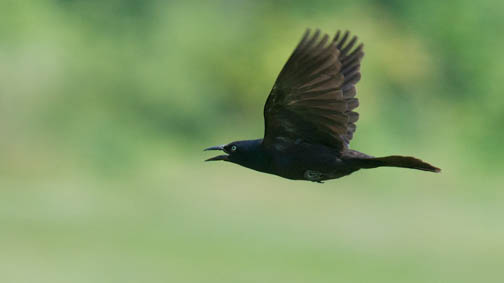
       The title is only partially correct today, however, as there are far more “blues” than “birds”.  The crowds and the volume of the music seems to have driven all but the heartiest of Common grackles from the site.  The major airborne attraction is actually a fire fighting plane which is periodically flying over the town to gather water at a nearby lake and then drop it on a forest fire burning off to the east.

        For now, the blues and the experience of mingling with thousands of other fans will occupy our time and efforts.  Tomorrow, we will ride the chairlift up to the quiet of the mountain top and we will see what avian fauna has retreated up here for the festival.  Till then…..


David Vest

Thursday, July 12, 2012

Day 194: July 12th – Massawepie Mire


Another sunny warm day, high 87

       As we ate breakfast this morning, I gazed out the dining room window and saw a fine specimen of a Purple finch feeding at one of the feeders.  I jumped up, grabbed the Nikon and sat back down at my seat.  The finch had flown up into the foliage just above the feeder and allowed me to shoot a couple of shots through the doube-pane before flying away.  Glass is never friendly when trying to shoot through a window, but the shot was good enough to document the presence of the finch at the feeder.      

       One of the premier birding sites in the Adirondack Mountain region is Massawepie Mire off Route 3, about 12 miles west of Tupper Lake.  The area consists of a variety of habitat including those most conducive to the somewhat rare boreal species like Boreal chickadee, Gray jay, Black-back and Three-toed woodpecker.

       We’ve been fortunate enough to have already garnered the chickadee, jay and Black-backed woodpecker this year, but the always elusive Three-toed is a different story.  We made the journey over to Massawepie this morning in the hopes of picking up this bird……a year-bird for sure, but more importantly, a lifer.

       We were last in Massawepie Mire in June of 2011.  What a difference a month makes!  Last June, bird song was so prevalent that you had to listen carefully to distinguish one song from another.  Today, if it were not for the songs of the Red-eyed vireo and the Hermit thrush, the silence would have been deafening.  We did get a Veery as well.
Veery

       Finally, as I looked in vain, trying to get a good view of the Red-eyed for the blog, I spotted a woodpecker high in a white pine.  The bird had its back to me and showed a mostly black back with just a smattering of white.  A Three-toed?  I could only hope!  These birds are very tough to find anymore due to habitat loss among other factors.  I aimed at the bird and shot a number of shots, figuring that I could more carefully examine the images at home and make a definitive identification and hopefully prove that the bird was indeed the Three-toed.  Well, some you win and some you lose.  Bummer!  The bird was in fact a juvenile Yellow-bellied sapsucker with similar features to the Three-toed, but definitely not the hoped for bird.  Looks like this bird will have to wait for another day. 

       Tomorrow, its off to Montreal and Mt. Tremblant.  We will encounter some more boreal habitat, so we can only hope for another chance at this elusive woodpecker.  Only time will tell…..

Wednesday, July 11, 2012

Day 193: July 11th – Higley Flow


Sunny, warm and dry…..beautiful!


       We are in the beautiful Adirondack Mountain area and spent the day playing in the woods and water.  Our friends have some great feeders and butterfly gardens and we spent an awful lot of time just scanning the yard. 


       Last year, it took me until December to get my first Red-breasted nuthatch of the year.  Today, I would stand by the sunflower seed feeder and just wait for a few minutes until the next red-breasted would drop in for a bite.  The hard part was to get one out of the feeder and in the trees to make the shot a bit more natural.  Most of the time, the nuthatches were so close to me, I felt I could reach out and pick them off the feeder no more than 4 feet in front of me.  Occasionally, a White-breasted would venture in and it was amazing to see the size difference at that close proximity. 

       The other major population of birds at the feeders were the Goldfinches.  On the thistle sock, it was not unusual to have more than half a dozen on the feeder at any one time.  Again, I tried to wait until I could get one into a pine and make it more natural. Eventually, a couple cooperated and gave me a decent shot.

       The next bird in order of cooperative nature was a female Purple finch which stuck around all day.  Usually at the feeder as were the others, I had to wait her out to get a nice shot of the bird in a more natural setting.  She finally got into a decent position as she waited her turn for a station on the sunflower feeder to open up.


  Lots of birds up here, but tomorrow I have to try and get out into the forest instead of hanging out around the feeders……it’s just too easy when you can sit on the deck with a cup of coffee and wait for the birds to come to you!

Tuesday, July 10, 2012

Day 192: July 10th – The North Country


Sunny and warm, then chilly and rainy, then sunny and warm……

       We’ve begun our trek north and has an interesting journey up to South Colton where we will be staying with friends for the next couple of days.  When we left home, it was sunny and cool but rapidly warmed up into the 70s.  By the time we hit the “Dacks”, the sky was darkening and the temps were dropping.  Whiel it was still fairly sunny, however, we did stop and take a good look at the Hudson River at North Creek.  Back home near West Point, the Hudson is over 200 feet deep.  It is amazing to see it here closer to its headwater.  Here, you could easily walk across the river and barely get wet.  As the summer progresses, it will grow even more shallow.


        Eventually, by the time we hit Long Lake in the heart of the Adirondacks, it was teeming rain and temperatures had dropped almost 20 degrees into the 50s.  Following a lengthy lunch at the Adirondack Hotel (over one hour for chicken fingers and a sausage and pepper sandwich?), we continued north and the weather rapidly cleared with temps gradually climbing back into the upper 70s as the skies brightened.

        As we drove past one of the many swamps along the roadside, we noticed in a bare snag a nest with what appeared to be chicks of good size residing within.   We did a quick 180 degree turn which had Sharon clutching to the door handle and returned to find two Great blue heron chicks on the nest.  The parent which had been with the chicks was not comfortable with our presence even though we were at least 300 yards distant.  And so, I grabbed a couple of shots of the chicks, got back into the car and headed back north towards our final destination.

      
       When we arrived in South Colton, we were greeted by sunny skies and warm temperatures.  Our hosts have a beautiful home on one of the impoundments of the Racquette River and are true lovers of nature…just another reason that we have stayed friends for over 40 years.  Anyway, they love to feed the chipmunks and the birds and that makes this a special place for us to grab some excellent photo-ops of some of the north country’s wildlife.  We were greeted first and foremost by a barrage of chipmunks who were looking for a handout.  Our host Rosie accommodated them with peanuts which they would gather and then quickly run of to horde in their larder.


    A Red squirrel was obviously privy to what was going on here and made an appearance in the hopes of also taking advantage of the feast.

       Hummingbirds, Blue jays and Goldfinches were also at the feeders as was a fine looking Red-breasted nuthatch……..harbingers of things to come here in “God’s Country” over the next several days.


Monday, July 9, 2012

Day 191: July 9th – Visitors to the Butterfly Garden


Still warm in the high 80s, calm breezes, and sunny

       Spent some time doing the obligatory yard work this morning and then refilled the few “summer feeders” that I keep going during the warmer months.  Once the area was looking inviting to friends of the human and avian world alike, I sat back with camera in hand and watched to see who would come and visit the butterfly garden.

       As hoped, I had a few welcome visitors in the form of butterflies.  Both the Cabbage white and a number of Silver-spotted skippers came along.  The skippers are a species I always expect to see at the butterfly bush and they rarely disappoint.

       I also have a couple of hummingbird feeders in this same garden and likewise, they were eager to come in for a free lunch today.  I have a pair of Ruby-throats that visit regularly.  It could be more than the two of them, but I’ve only seen two at any one time.  Nonetheless, it is always a pleasure to see and hear them buzzing along as they come in to feed.


       I had a few other birds in the immediate area as well.  A Chipping sparrow which has been a regular here this summer came in to feed on the seed that had fallen to the ground from the feeder I have set up just around the corner from the garden.  He’s such a handsome little fellow, I always appreciate his company when he’s around.

       One visitor that I’m not too keen on is also showing up all of a sudden.  Yellow jackets have built a nest in the top eaves of the front of the house, and they, like the hummers, appreciate the nectar that I’m supplying.  So far, they are not a real problem, but if the nest continues to grow and the population does likewise, certain measures may have to be taken.  I’d much rather let nature takes its course, so we’ll be patient and see what transpires.

       Tomorrow, it’s off to the north country and the Adirondacks.  Hope to have some new species to bring to you in the next few days.  Wish us luck…..

Sunday, July 8, 2012

Day 190: July 8th - Good neighbors


Continued hot in the 90s, a bit less humid and still calm

       And so the heat wave continues.  Less humid, yes; but still warm enough to make sitting out in the sun a bit uncomfortable.  We were in Wappinger earlier this morning at another of our grandson’s baseball games.  On the way back down to Orange County, we stopped at one of our perennial favorite birding spots, Stony Kill Farm in Fishkill. 

      Budget cuts throughout the state have impacted man of the environmental educational facilities and Stony Kill was one of those programs decimated by said cuts.  The farm is still maintained, however, to the point where we can still visit and bird the grounds.

      This morning’s most interesting sighting was that of two Bluebird nest boxes mounted on fence posts bordering the fields of the farm.  Rather than bluebirds, however, we found a couple of other tenants utilizing the boxes to bear and rear young.  In one box, a House sparrow was busy flying back and forth between the fields and her brood, a bill-full of insects and grubs quite apparent upon each return visit.

       I had seen at least one sparrow with food prior to realizing that the bird was nesting in one of the bluebird boxes.  Later, I saw the sparrow emerge from the box and then return with the meal.  While away from the nest, the sounds of chicks within was more than obvious.


    As I watched and photographed the sparrow making her foraging trips, I noticed a second box no more than 8 feet away and to the right was also the site of nesting activity.  This time, however, it was a tree swallow which busied itself making similar forays to and from the nesting box with similar intent.  It was nice to see that these two different species were cohabitating in such close proximity with no issues about whose territory this was.  The fact that they were using nests provided for bluebirds perhaps made them more than tolerable of one another (if we would like to believe they think and act like we humans do!)  I’m sure that both families will go on to grow into fine adult birds and that they too may someday nest side by side.

Saturday, July 7, 2012

Day 189: July 7th – Lemmon Road


Warm, calm and partly sunny

       The forecast for today is for more of the same….hot, hot, hot.  Close to 100 degrees is predicted for this afternoon, so it’s a good idea to get out and back early.  By 8:00 AM, I was in Doodletown (Bear Mountain State Park) along the stretch of old gravel road known as Lemmon Road. 

        I was actually surprised and pleased to find that there were a lot of birds actively singing, and while many chose to remain under the cover of the understory and the canopy, I still had fleeting looks at a good number of birds.  The clearest shot was an upclose and natural view of an Eastern towhee which flew so close to me across the trail that I could clearly hear his wing-beats.  When not in the breeding season, the towhees generally simply give their call of “Tow-heeeee”, but now they are singing the whole song…..”Drink you teaaaaaaa”.  It’s hard to misidentify these songsters when they are in full voice.

       Another bird easily identified by song is the Indigo bunting whose lyrical “Fire!  Fire!  Quick! Quick!  Putitout!  Putitout!” is repeated over and over.  Today, however, this bunting never did give the full version, opting rather to emit its simple single chip note.  I really did not know what bird was making the chip until I was able to spot motion in the wild grape leaves and get my binoculars and finally the camera on the subject.


      Among those seen, but now well enough to capture an image were many reclusive Hooded warblers.  These were heard all along the trail singing their “Tweet, tweet, tweeteo” melody.  Red-bellied woodpeckers and Northern flickers were also seen vocalizing.  Heard but not seen were a Magnolia warbler and several Worm-eating warblers.


       The butterfly of the day goes to the Cabbage whites by sheer numbers alone.  They were my constant companions as I strolled down the gravel path.  They obviously had their favorite wildflower to supply their breakfast…..the thistle as is evident in this parting shot.  

Friday, July 6, 2012

Day 188: July 6th – Storm King Mountain


Continued heat wave with calm winds

View south from Storm King Mountain
       A trip up to the side of Storm King Mountain along Route 218 was hopefully going to produce some sightings of the Peregrine falcons known to roost here.  Whether it was the heat, the time of day, or just plain old bad luck, there were no falcons to be found today.  The skies were clear in spite of the high temperatures and the view was spectacular as always, but not one bird, falcon or otherwise was seen flying over this mountain today.


       As we came around to a lower overlook, I could hear the call of a Bald eagle and quickly got out and scanned the skies for this majestic bird.  Once again, the bird had to be calling from a perch rather than flying for no bird was seen.  Finally, I did hear the familiar (Very familiar this year it seems!) song of the Scarlet tanager.  I finally realized that there were two on opposite sides of the road.  Eventually, I found one of the birds calling from among the foliage and got a quick shot off before this bird also disappeared into the forest.


       We know the falcons are there, and we know that folks have seen them quite recently.  So, once the weather breaks, we will take another look, perhaps from a different vantage point in the hopes of getting a decent photo to share on the blog.  

Thursday, July 5, 2012

Day 187: July 5th – Birdies on the golf course


Another warm sunny day

       Thursdays are “Bogie Busters” golf days when a group of “boomers” meets at Storm King Golf Club to play a round of 18 at one of America’s oldest courses.  I’ve mentioned before that I know about the downside of  building golf courses and how habitat fragmentation, use of chemicals and herbicides and so on can adversely affect the environment.


       I’ve also made my point that I generally see quite a few birds at most of the courses I’ve played, so I think there must be some sort of trade-off.  Birds love “edges” and the courses provide plenty of these.  Birds need water during the summer, and the courses provide plenty of water.  Courses generally plant plenty of trees in the fairways and around the holes, and birds need cover and the food in the form of fruit and seeds that these provide.  So yes, I defend the golf courses and their management as long as they take the environment into consideration.

       Today’s round was fairly kind to me with two birdies on the back nine.  I decided at that point to make my blog entry today about the other birdies that are found on the course.  After my round, I remounted the cart armed with the Nikon D300 and 80 – 400 mm zoom lens rather than my arsenal of clubs and drove one loop around the nine holes.  In my trip around, I enjoyed watching and photographing 12 different species…..all in the dead heat of mid-day.   The Red-tailed hawk which was around all morning had taken off for parts unknown this afternoon, but birds like this Eastern kingbird were plentiful.


       Around the small pond on hole #3, Red-winged blackbirds and Common grackles were calling loudly and seemed to take offense at my intrusion.  I wondered if there might be nests nearby and therefore didn’t tarry for long.
Common grackle
Brown-headed cowbird 
       The "villainous" Brown-headed cowbirds which are known to “borrow” nests from other nesting species, dispose of the eggs within that nest and then lay their own in that same nest, were also around, lending credence to my theory that many of these birds were tending to young or incubating eggs.

       The ponds were supplying plenty of insects at the surface and there were quite a few Barn swallows taking advantage of the buffet being provided compliments of the course management.

       And so, even in the dead of summer at mid-day, there are birds to be found actively pursuing their daily tasks.  You just have to know where to look, and today it was at the golf course.

Wednesday, July 4, 2012

Day 186: Happy 4th of July!

The RED


Hot with a threat of thunderstorms

The WHITE

  Far too busy to get out on a serious birding adventure today, so we will look back at three birds of this year in keeping with an appropriate theme….Hurray for the Red, white and blue!


and the BLUE!

Tuesday, July 3, 2012

Day 185: July 3rd – Stonecrop Gardens


Hot (91), sunny and light breeze

      Stonecrop Gardens In Cold Spring, NY is a collection of gardens and plants which sits at an elevation of 1.100 feet.  It serves to demonstrate the kinds of gardens that can successfully be grown in a relatively restrictive climate and landscape.   Gardens like rock cliff gardens, water gardens, woodland gardens, raised alpine stone beds, and an indoor conservatory are all part of the collection here at Stonecrop.

       The environment makes this 12 acres of pristine habitat prime real estate for may of birds which reside or migrate through the Hudson Valley.  Goldfinches, House and Song sparrows, Gray catbirds, Robins, Tree swallows were fairly abundant today.  I have to admit, I was really looking for other forms of wildlife this afternoon as the heat was pretty oppressive once again and I did not anticipate a great deal of avian activity. 

      The many gardens also provide a perfect habitat for a wide variety of butterflies, and the water features also are home to a variety of amphibians, reptiles, and dragonflies. 


       I concentrated on these water features today to see what was making use of the streams, ponds, and waterfalls in the gardens.  The “jug–o-rum” calls of the bullfrogs greeted us even before we had a chance to set foot inside the gardens proper. 

       Again, my attention was drawn to the dragonflies which lately have become a diversion when the birds have not been so evident due to nesting and the heat of this summer.  The Eastern pondhawk was the most prevalent member of the “odes” and therefore worked its way onto the blog today.


Northern Water snake
       I remembered that last year, there were an inordinate number of Northern water snakes on the property, and made a concerted effort to see if I could find any today.  While not around in the numbers that I found last year, sure enough at least one was prominent enough to be easily photographed at fairly close proximity.  We renewed out membership to the gardens once again today, so you’ll be seeing more reports during the upcoming months about the changing wildlife we find.

Monday, July 2, 2012

Day 184: July 2nd - The Plight of the Hemlocks


Sunny, mid 80s but not as humid, light breeze

       As I hiked around Brooks Lake Park this morning, I could not help but notice the number of dead hemlocks lying on the ground a short distance after entering the trail.  It is indeed difficult to find a live hemlock standing in this forest. 


The problem is the result of the Hemlock woolly adelgid, an insect pest that was introduced from Japan in 1951.  It has been a major problem in many forests throughout the northeastern United States and the infestation is thought to cover about half of the hemlocks eastern range. These insects cause damage by sucking sap from the hemlocks using piercing mouthparts which inject a poison into the needles as they feed.  The infested trees drop their needles prematurely, become weakened and eventually many will die.  The hemlocks you see lying on the ground in these images were victims of the hemlock woolly adelgid.

Wooly adelgid (photo from NPS)

       At present, there is no long term solution to the infestation of the adelgid.  The National Park Service has been trying some short-term “life support” treatments in some of the National Forests, but as of now, there is no permanent cure.  If no solution is found, the hemlock may well end up as rare as some other majestic trees that have all but disappeared from our forests, the American elm and the American chestnut.
Former thriving hemlock stand at Brooks Lake Park

Sunday, July 1, 2012

Day 183: July 1st – The top of Bear Mountain


Sunny, hazy, and warm

       Well, today marks the half waypoint of this “project 365”.  The goal was and still is to publish a blog about the natural world each and every day containing images recorded on the very day for a full year.  This being a “leap year”, it is more appropriately called a “Project 366” I suppose.


       I decided to head up to the summit of Bear Mountain, knowing full well that there would be a crowd growing on this beautiful summer day as the morning wore on.  When I first arrived, however, there were a few motorcyclists, a few more bicyclists, and a smattering of cars at the top.  I went down to the north view overlook and was pleased to find that at least for the moment, it was just the birds and me. 

       I’ve always found Bear Mountain to be a pretty safe bet as far as finding singing birds in the summer.  Things may be pretty quiet down in the valley, but up here on top of the mountain, there just seems to be action.  Today was no different.  When I arrived at the overlook, I immediately heard the familiar refrain of the Prairie warbler.  Its ascending trill is unmistakable.  I’ve often seen the bird perched in one of several trees, and sure enough, there he was this morning.  I had quite nice lighting which is so often the case earlier in the mornings, and I took advantage of the situation by capturing several images.

       As I shot my photos of the warbler, it flew off only to be replaced by a Chipping sparrow singing energetically as well.  Soon, both birds tired of my presence and departed. 


Chipping sparrow


       Still, I continued to hear quite a few more birds, but as the crowds and traffic increased, the birds seemed to move further into the forest.  Good looks at the Eastern towhee and audible “sightings” of Red-eyed vireos, Scarlet tanagers, Eastern wood pewee, Yellow warbler, and more Prairies were all that I could muster as the morning wore on.  Still, I know that I’ll have to return during the week when the mountain top will basically be there for just Sharon and me.  Looking forward to it…..and looking forward to sharing the next half of 2012 with all of you!