Friday, January 20, 2012

Day 20: January 20th- Hilton Head Island

Mostly sunny, calm,  high 60's

     A most pleasant day today as we spend our final day on Hilton Head Island exploring the last few "Important Bird Areas"  on the island.  We began by exploring the beach and found surprising few birds.  A few shallow depressions filled with water were being foraged by a half dozen or so Sanderlings, and Ring-billed gulls were seen out over the surf.  But that was about it for the ocean environs.  

The beach at Hilton Head, NC
      From the beach, we headed to a local park by the name of Jarvis Creek.  Beautiful little park with a good size deck overlooking a pond which was just filled with Double-creasted Cormorants, Ring-billed gulls, and a lone Wood stork (first of the year).  There were so many small fish near the surface that the cormorants were all dipping down and coming up with a fine morsel on virtually every attempt.  The gulls were swooping down with similar success and a pair of Greater scaup (also FOTY) were crossing the opposite bank.
Cormorant buffet


DC Cormorant
      At the end of the day, however, I finally capture what I have to consider as the "Pick of the Day".  The quality was not the best, but the subject and the context make it stand out in my mind.  Of all places I've photographed Eastern bluebirds, I never before captured the image of this bird while perched on a deck brush.  The bird, located on a boat at Harbour Town, was more than cooperative and wins the honors of the day.  Here he is......


Image of the day - Bluebird in Harbour Town


Thursday, January 19, 2012

Day 19: January 19th - Robber's Row Golf Course

Sunny, temperature 61 degrees

Robber's Row Golf Course
       The jury is still out regarding the effect of golf courses on our environment.  Do the chemicals used by so many of the courses have an adverse effect on the surrounding area, or are course management strategies  changing....becoming more "green" to the point that they might actually enhance the habitat?  Well, there is no getting around the fact that the local environs are altered to a fairly substantial degree.  I have mixed feelings in that I love nature, I love birding, I love photography, and I also love playing golf.  So, obviously what you are getting here is not exactly an unbiased reflection.
      What I have seen over and over is a great deal of wildlife activity taking place around the courses I've played.  The positive side is the addition of water features, the efforts by many courses to preserve the surround habitat which might otherwise become strip malls, condos, parking lots, and any other of a plethora of other less desirable constructions.  The courses also provide "edges" along which many birds find excellent hunting opportunities.
      A brief anecdote regarding yesterday's outing at Robber's Row Golf Course on Hilton Head Island.  The entire left hand side of one of the Par 3's was a water feature.  The shallow pond extended about 125 yards and was about 30 yards across.  Along the far edge, we observed 5 turtles being ever so slowly stalked by an alligator.  The gator was moving almost imperceptibly towards its quarry while to our amazement a flotilla of 6 Hooded mergansers swam in right next to the gator.  Within a few moments, a Great egret had also joined the group.  We didn't have time to see any outcome (if there indeed was one), but I do know that gators will gladly feed on any unsuspecting turtle not vigilant enough to avoid becoming a meal.  Note the "heads up" posture of the turtles in today's "photo of the day".  I have the feeling that none of these guys was going to satisfy the gator's appetite today.  
      Golf, birding, nature, photography...it doesn't get much better than this.


Turtles and Gator in waiting

Wednesday, January 18, 2012

Day 18: January 18th - Sea Pines Forest Preserve

Early clouds, becoming sunny and mild (61 degrees)

     Well, what a pleasant surprise.  Less than 5 minutes from the door of our condo in Sea Pines, Hilton Head, we discovered the Sea Pines Forest Preserve.  The 605 acres was set aside in 1970 for wildlife habitat and outdoor recreation.  One can drive throughout the preserve or park and hike the several miles of woodland trails, bridle paths, and wetland boardwalks.  Several of these lead to observation decks, fishing docks, and a major picnic pavilion.

Lawton Rice Field Boardwalk
     There are four lakes within the preserve and our first sightings of Anhingas this year were on this preserve.  One of the trails is aptly named the "Anhinga" trail, and all along the shoreline, we found both male and female birds.

Female anhinga
      The shot(s) of the day go to a series of photographs which show a Forster's tern taking advantage the rich bounty of baitfish upon which the terns were feeding.  As we watched their plunges into the water, we could tell that the success rate was high with more birds emerging from their dives with fish in their bills than not.  This preserve is a gem and we will revisit it in the future.

Forster's tern - begins the dive
Locked on the target

Impact is imminent


Tuesday, January 17, 2012

Day 17: January 17th - Savannah National Wildlife Refuge

Partly sunny, 68 degrees, calming winds

      As I wandered through cyberspace this morning, Googling new locations to bird around Hilton Head Island where we are stationed for the week, I realized that we were only 28 miles from another great National Wildlife Refuge, Savannah NWR.  I proposed the possibility of a visit to this site to our group, and with little hesitation, we packed the SUV and were ready to roll.

Laurel Hill Wildlife Drive, Savannah NWR
     Upon arrival, we scout the area around the kiosk at the head of the Laurel Hill Wildlife Drive, a 4 mile gravel road around the impoundments of the refuge.  A few "LBJ"s (little brown jobs for you non-birders) are flitting around the trees, but we are anxious to get out onto the drive.
     We drive through the 4 mile drive in a blistering mile an hour pace.....that's right, 4 hours to complete 4 miles.  Harriers, kestrels, Red-shouldered hawks, and at least one Sharp-shinned hawk are patrolling the area as a nice collection of shovelers,  Blue-winged teal, Gadwalls, the omnipresent American coots,  Pied-billed grebes, Lesser scaup and others dotted the surface of the impoundments.  With all these on site to choose from, finding the "shot of the day" was going to be difficult.  That was until we ran into our first-of-the-year Logger shrike sitting out on an open limb in perfect lighting made its appearance.

Loggerhead shrike
       At day's end, we did manage to add 5 new "year birds" from the 40 birds we listed for the day.  Great weather for January 17th, an enjoyable productive drive around the preserve, and a nice visual images of some wonderful birds made for another fantastic day in the field. 

Monday, January 16, 2012

Day 16: January 16th - Pinckney National Wildlife Refuge

Partly cloudy, calm winds, 54 degrees

     Pinckney NWR is a wetland located 1/2 mile west of Hilton Head Island, SC.  Our targets today include any of the sparrows associated with salt marshes....Seaside, Saltmarsh, and Nelson's.  Let's see what we can find!

Pinckney National Wildlife Refuge

     Plenty of hiking around the refuge and very little in the way of a "drive-around".  The hiking is very easy, however, as the "trails" are as wide was most wood roads and are steady underfoot.  Our targets today are the sparrows as mentioned above, but they were so elusive as to make identification difficult at best, skulking in the depths of the thick cover of reeds and rushes as they are want to do.  
     We travelled along the Ibis Pond Trail and eventually came upon the "pond".  More of a fresh water moat around an island of low lying scrub and trees, the area was an oasis for the local avian life.  Passerines were flying in and out of the shrubs, and "first-of-the-year" Common gallinules, Coots, and Hooded mergs were swimming in the water surrounding the island.  
      On our right, as we circumvented the island oasis, a thick stand of long-leaf pine seemed like a likely habitat for the Brown-headed nuthatches which had eluded me up at Santee.  No calls, no visual sign, but  man, it looked like such ideal habitat for the Brown-heads.  So, I pulled out the "jam" and gave a few "shout-outs" to see if I rouse any these little guys.   Within 30 seconds, three of the nuthatches descended upon me.  I grabbed the Nikon and fired away....evidence of another year bird.
Brown-headed nuthatch
     Coming around to the back side of the island oasis, we came across a pair of Hooded mergansers.  The male was obviously interested in the female as he had his hood fully raised and was certainly making headway, or so we thought.  Before long, he seemed to lose interest and with lowered hood, swam away from the female with an air of "who needs you?"  Playing hard-to-get may pay off for the drake, however, as when we were about to leave, the hen seemed to be moving in closer, trying to close in and perhaps make amends with the male.  It is the middle of winter, and this may in fact be mere role-playing.  But for now, it appears to be a "man's world" with the male in control of his own destiny.


Video: Hooded mergansers

Sunday, January 15, 2012

Day 15: January 15th - Shelter Cove, Hilton Head

Beautiful sunshine, cool mid 50's, Calm winds

     Our first full day on Hilton Head is led by our friends John and Rosie who scouted out the area prior to our arrival yesterday afternoon,  They have located a community park called Veterans's Memorial which is part of the Shelter Cove Park system.  They had nice birds there yesterday, and so we head out with eager anticipation.  
White ibis
       We begin with a mature Bald eagle soaring overhead, an indication of things to come.  Our second bird of the day is a chevron of three White ibises doing a fly-by as we watch from the observation deck overlooking the marsh.  Great blue herons and Great egrets dot the landscape as we scan the horizon for any other new species.  We come to a meadow which is literally inundated with Yellow-rumped warblers on almost every tree, shrub, and sapling.  A pond the size of a football field lies beyond this meadow and a cursory glance reveals a large group of male and female Buffleheads.  We move around the pond behind the protective cover of wax myrtle and bay to find that there are much more than the Buffleheads to keep us looking.  Great blue herons, Great egrets, more than 10 Black-crowned night herons, a lone Pied-billed grebe, a Bonaparte's gull, half a dozen Double-crested cormorants, and both Turkey and Black vultures overhead join the myriad of Yellow-rumps and Palm warblers to set this beautiful stage with a remarkable cast of characters.  
Shelter Cove Park
      We spend 20 minutes or so watching the show and then head back towards the car.  On our way, we come across a small group of Eastern bluebirds which descend upon us to see what we are up to.  

Eastern bluebirds
     As we leave the area, we make one more stop at a marsh across the street and walk a short way along a black-topped trail.  Coming around a blind corner, we run headlong into a low flying Sharp-shinned hawk which "buzzes" us before continuing down the trail.   Our final sighting is a group of 4 Great egrets along with 2 "first of the year" Snowy egrets.  It's time to head back to our quarters to watch the Giants-Packers game.  Quite an afternoon for just staying close to our condo.  We have a listing of 9 more nature preserves on the Island to visit, and so we know that we will not be at a loss for places to check out.  

Saturday, January 14, 2012

Day 14: January 14th - Santee National Wildlife Reserve

Calmer winds, temp = 54 degrees, sunny

Santee NWR wood road
          Never says never! Our major target bird as we descend upon Santee National Wildlife Refuge was the Brown-headed nuthatch.  Every time we travel through this part of the state, we stop at the same kayak launch in the Cuddo Unit of the refuge.  It's a sure thing.  "We never miss this bird".  Well, "never" ended today.  We waited and we waited for the nuthatches to appear as they always do.  But not today.  Somewhat of a disappointment in that this is a bird that is difficult to find.  And today is not the day to check this little guy off our year list.  BUT..... as we are waiting to find the nuthatch, Sharon spots two Ruby-crowned kinglets flitting as kinglets do amount the branches of the pines.  They are called "ruby-crowned" because of the striking red crowns these birds display when aroused.  You "Never" see the ruby crown, except for today.  Both kinglets were in full display with their crimson swatches glowing in the midst of the dark green of the pines.   So, you take what you get.  No nuthatch, but a rare sighting of two kinglets in full regalia.

Ruby-crowned kinglet
     The red heads are the color of the day as we also have un unusually fine sighting of a red-bellied woodpecker along one of the wood roads in the preserve.  The lighting was ideal and the bird was well positioned to give me one more decent shot for the day.

Red-bellied woodpecker
 It's time to head south again, and it's off to Hilton Head for at the next week.  Stay tuned and we'll see what the upcoming week has to offer.

Friday, January 13, 2012

Day 13: January 13 - Mattamuskeet NWR, NC

Sunny, cooler with temps in the low 40's, windy!

     We drove down to the area near Mattamuskeet NWR around Swan Quarter yesterday afternoon so that we would be close to the refuge this morning.  Our goal is to get decent shots of the Tundra swans, and the rangers we called said Mattamuskeet was the place to check out.  Upon our arrival, we found our first of the year Hooded mergansers in close and in great light.  Whether we find the swans or not, this sighting makes the trip well worth the time and effort and puts our fears of a Friday the 13th jinx to rest.

Hooded merganser
Along the wildlife drive into the headquarters, we find no swans, but we did have good looks at Pintails, a fine juvenile Bald eagle, tons of Coots (again), our first DC Cormorants of the year and some nice Ruddy ducks and Pied-billed grebes.  
     At the refuge headquarters, we struck up a conversation with one of the park rangers and asked him about his thoughts as to our best chance to capture some decent images of the Tundras.  He sent us back out to the main road we followed on our way to the refuge access road and said to check all along the road sides along the impoundments.  Although the birds were somewhat distant, we did eventually find a group close enough to give us acceptable shots....couldn't ask for much more than that.

Tundra swan
     Following a couple of hours at the refuge, we take off for Santee, SC where we will visit Santee National Wildlife Refuge tomorrow morning.  From there, it's on to Hilton Head Island where we will spend the next week with our northern NY friends John and Rosie.  Hilton Head is new to all of us, so it will be a case of the blind leading the blind around the island.  Wish us luck.....

Thursday, January 12, 2012

Day 12: January 12th - Chincoteague Island, VA

Sunny, mild (60 degrees) calm

The Beach at Chincoteague
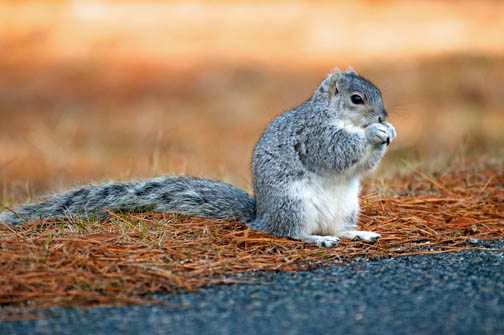
     Continuing our journey south, we bird Chincoteague Island along the Virginia coast in search of some new year birds as well as two sought after mammals, the wild ponies of Chincoteague and the endangered Delmarva fox squirrel.  To be honest, at this time of year, the wild ponies are herded into paddocks and kept safe for the winter, so finding these is not exactly like the proverbial needle in the haystack.  It’s much more like going to the petting zoo.  But, they are wild, they are not tame, and they are charismatic.  So, here’s the first picture of the day….the wild ponies of Chincoteague.


Wild ponies of Chincoteague 
        As for the “year birds” we were hoping for, we did even better than anticipated.  At one point, we had Bonaparte’s gulls, Forster’s terns, Snow geese, Tundra swans, Marbled godwits, Pintail ducks, and many more “expected” birds all in the same pond at the same time.  We checked the beach in the hopes of spotting “first of the year” surf scoters as well, but that was to no avail. 

Snow geese and Tundra swans
Bonaparte's gull following Forster's tern     
     We are still heading south and therefore could not spend as much time as we would have liked at this birding magnet, but for the two hours we were able to devote to the site, we were more than well rewarded.  As we reluctantly departed from the Island, we did manage to come across our first of the fox squirrels, a fitting farewell to a fine stopover.  For now, it’s “on the road again”. 

Delmarva fox squirrel


Wednesday, January 11, 2012

Day 11: January 11th - Atlantic Coastal Plain

Occasional showers, calm winds, 47 degrees

Atlantic Coastal Plain south of Diver, Delaware

     We're on the road, heading south through New Jersey, Delaware, Maryland, and now Virginia.  Living in the Hudson Highlands, we  are in "topo shock" as we leave the mountains and enter the Atlantic Coastal Plain.   The Coastal Plain is an area of low elevation and low relief what extends all the way from New Jersey to Florida.  Composed of mostly sandstone and in many areas covered with deposits of sand, the region is ideal for agriculture.  Unfortunately (in the eyes of many of us birders), it is also ideal for development.  Flat, good drainage, and proximity to the attraction of the shore makes this prime real estate.  The combination of the dreary weather, the occasional rainfall, and the fact that we are in transit, makes for limited wildlife observations today, but tomorrow, we plan on visiting Chincoteague Island in Virginia, and we should be able to more than make up for our "sacrifice" today.  So, until tomorrow......

Tuesday, January 10, 2012

Day 10: January 10th - Vulture Roost

Cloudy, calm, 46 degrees

     It’s a cloudy and damp day.  Although the temperature is far too warm for snow, the humidity and the dreary skies belie that fact.  It’s the kind of day where a shot of vultures seems just the ticket…..dark subjects for a dark day.  Rings Pond in Cornwall, NY has for whatever reason become a favorite roosting site of vultures these days.  These roosts may attract 50 – 60 vultures at any one time.  The dominant species on this day is the more gregarious Black vulture.  The Black vultures are distinguished from their more common “cousins” the Turkey vultures by a black wrinkled face, shorter tails, and wing-tips which appear to have been dipped in a silvery wash.
Black vultures
     Why the vultures have chosen Rings Pond is a mystery to me.  These birds feed on dead animal matter called “carrion” and most often are seen along roadsides and landfills where such material is generally quite available.  Rings, however, is a municipal park with a pond much more attractive to the gulls, mallards, and escaped domestic ducks which are commonly observed here. 

     While locals may not be thrilled about the prospects of these neighbors moving in, the vultures are in fact quite sanitary.  Their digestive juices are so strong that their excrement is considered to be disease-free.  And while their appearance puts them in the ranks of the less charismatic characters of the natural world, their activity helps to dispose of dead and decaying animals and may in fact prevent the spread of certain diseases.  And so we see that in nature, beauty is only skin deep.
Roosting Black vultures

Monday, January 9, 2012

Day 9: January 9th - The Silent Winter

Sunny, light winds, 44 degrees


     “Those who dwell, as scientists or laymen, among the beauties and mysteries of the earth, are never alone or weary of life.”

One of only two Red-tails seen today

     In 1962, Rachael Carson first published her epic work entitled The Silent Spring.   Her book warned of a time to come when if things did not change, there would be no bird song to wake us in the morning or lull us to sleep at night.  Our use of pesticides was so rampant and indiscriminate that our avian neighbors were slowly being eradicated before our very eyes.  Well, thank God, those conditions were greatly remediated, much to the credit of Carson’s warnings, and we slowed the rapid decline of birds in our world.  

      Well, things are not so dire as they were in the 60’s and the reasons for our “Silent Winter” while not being well defined are more than likely the result of a fluky weather pattern that has developed across the Northeast this winter.  Many birders and others who spend a good deal of time in the forest have noticed an eerie silence this season when walking though the woods.  Our recent Christmas Count came up with the identical number of species as last year but the total numbers of individuals was half of what it was in 2010!  Today, members of the Harriman State Park “League of Naturalists” were out in the field to observe and count the number of birds and other wildlife species which were found in the park on this day.  Again, the numbers were way down. 
Tree sparrow

      True, there were pockets of good numbers of birds like this Tree Sparrow, and the White-tailed deer seen here were in good numbers (our group counted 43 today), but there was an almost frightening quietude as we hiked the trails of Harriman in most areas.  

      Unusually warm temperatures?  Results of the devastation wrought by Hurricane Irene and the freak October snowstorm in the second half of last year?  One can only guess.  But it certainly will be interesting to see what is headed our way for the rest of 2012.

Check out the video of the many White-tailed deer seen during today's wildlife count.


Sunday, January 8, 2012

Day 8: January 8th - Bald eagle Roost Count

Partly sunny, calm, 42 degrees

     What a difference a year makes.  Each year, the Trailside Museum and the League of Naturalists at Bear Mountain and Harriman State Park help the state conduct a three part Bald eagle “Roost Count”.  The idea is that if you know where the eagles which are wintering here in the Hudson Valley will roost for the night, you can get a fairly accurate count of how many eagles are in the area by having volunteers set up to watch these eagles arrive at the various sites and count them.  Since we have a number of roosts covered by different volunteers at the exact same time, you know that the same birds are not being counted twice.  The site to which we have been assigned is known as the “Anchor Monument” near Tompkins Cove, NY. 
Anchor Monument Roost Area     


Bald eagle (archival photo)

     Last year, the weather pattern was just the opposite of this winter.  Last year, there was snow on the ground and ice on the river.  When there is ice on the river, you get eagles visiting this part of the Hudson..  North of us, if the lakes and rivers are frozen over, the eagles have no access to the fish within those waters.  And so, they migrate south to our location where there is easy access to open water and fish.   Last year, an unusually cold and snowy winter, we counted over 60 eagles at our site alone.  
     Fast forward one year.  The winter of 2011-2012 has up to this point in time been inordinately warm with only a couple of days where the temperature has not risen above the freezing point.  If there is unfrozen water on the lakes and streams north of us, the eagles need not make the trip to the Highlands.   They have ample access to food right where they are and are content to remain there.  That is apparently the case this year as evidenced by our latest count at the same roost area…..two birds.  That’s right, over 60 last year and two this year.  The second bird to be counted actually arrived at the very end of the observation period as the sun set and the full moon rose. 

     The winter has only begun, and what will transpire in the next two months remains to be seen.   But for now, the eagles in the Hudson Valley are few and far between.