Saturday, April 23, 2011

The Galapagos Islands

Galapagos tortoise
Blue-footed booby
Courting frigatebirds


Elliot's storm-petrel
Red-footed chick

        A dream of most nature lovers, birders, and photographers is to one day visit the Galapagos off the coast of Ecuador.  
American oystercatcher

Galapagos fur seal
Red-billed tropicbird
     Sharon and I lived this dream last month and came home with incredible memories of an incredibly beautiful and wondrous place.  We spent 8 days on board the Isabella II visiting 7 of the major islands of the archipelago  with each island offering a new assemblage of birds, reptiles, mammals, and flora. 

      During the course of the 8 days, I managed to shoot well over a thousand photos and came home with 850 after culling our the duplicates and blurry shots.  I rarely needed to use a lens of more than 200 mm as the subjects were more than willing to pose up close and natural.  
Great frigatebird

     Well, here we are back home and after a full month, I've finally got most of the shots edited and filed.  Here are several of my favorite shots of the classic Galapagos wildlife.  I should mention that our trip was arranged by Tauck Tours out of CT and they did an exceptional job.  Our guides were all native Ecuadorians with an in depth knowledge of the flora, fauna, geology, and history of the Galapagos.  
Nazca booby with chick

 It's only April, and already we have had an incredible year of birding in new vistas.  We are looking forward to a banner year!


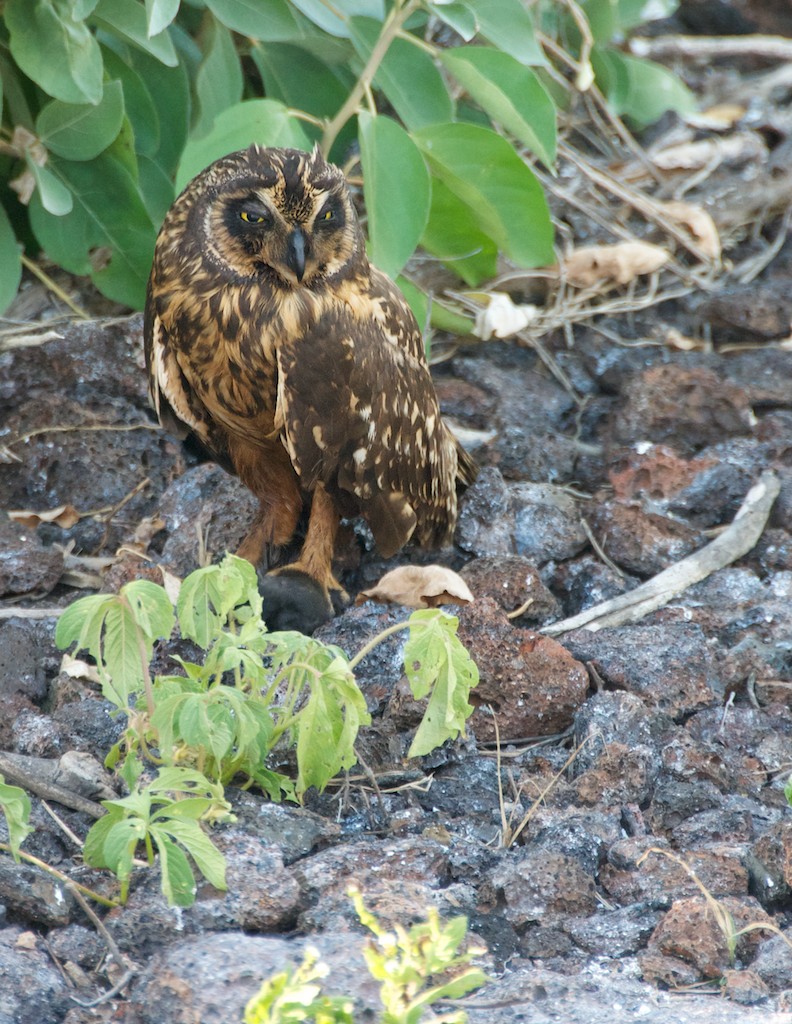
Short-eared owl


Galapagos sunset

Sunday, March 13, 2011

Rio Grande Valley


Altamira oriole
     When our good friends from northern NY e-mailed us to tell us they had arranged for a time-share condo in the southern Rio Grande Valley and would like us to join them, it took us all of 15 minutes to get on the phone and start making plane reservations.  This is the kind of offer birders don't think twice about, you just seize the moment and do it!  The Lower Rio Grande Valley is a mecca for birders.  You can find species here that you'll never see anywhere else in the United States of Canada.  Add to this the number of "visitors" which fly across the border and you've got the makings of one wonderful week of birding.  Our only regret was that we were only going to be in Texas for the one week.  So many locations, so many species, and so little time!  That being said, we certainly made the most of what time we had, visiting 10 great birding locales in 5 and a half days.  We brown-bagged our lunch so that we could eat on site while birding.....didn't want to miss a second of this wonderful opportunity.
Green jay

     We began on Sunday morning with a visit to Sabal Palm Grove Preserve.  This site is right on the border of the US and Mexico.  In fact, you have to pass through the infamous steel wall to get to the preserve.  One of the docents there told us that many visitors turn around at the wall thinking they are illegally crossing the border.   Well, we weren't deterred by that ominous wall and continued to the parking lot of the preserve.  At the preserve's center, a small building adjacent to the parking lot, we met Andreas, a staff biologist, docent, and student at UT in Brownsville working on his Masters in Ornithology.  He was the perfect contact to meet on our first day.  We had already received great information from several of our birding club members back in New York as to the "must see" sites in south-east Texas, but our new friend refined our search for birds and gave us further excellent advice.  What a way to start our trip.  

 The "front yard" of the office was comprised of a small patch of bare ground under the lush canopy.  Feeders and water features were present as were orange halves stuck on the limbs of the trees.  Within the first half our of our first experience in birding Texas, we had 8 "life-birds": the Altamira oriole, Green jay, Olive sparrow, Long-billed thrasher, Golden-fronted woodpecker, Buff-bellied hummingbird, Black-crested titmouse, and Great-tailed grackle.  A trip out to the "Resaca" or 0x-bow lake gave us many more birds including a new NA lifer, the Least grebe.  On the way back to our home base, we stopped at the University of Texas - Brownsville campus and added the Neotropic cormorant to our life-list as well as the Couch's kingbird.  Ten life birds on the first day was not a bad way to begin our Texas birding experience.

Sunday, February 20, 2011

Black-headed gull in Florida


     Sharon and I were up early this morning to travel up to Port Orange, FL in search of the Black-headed gull which has been seen sporadically in the area.  When it does show up, it is generally in the same spot, a dock along a back road which runs along the Halifax River.  We've made several trips up here already, after all, it is only a 20 minute drive.  But up until this morning, this is one chased bird which has eluded us.  When we arrived, we found 4 other birders who had been on the site for at least an hour with no results.  We arrived at 7:45AM and spent over an hour checking out the one dock on which the bird was 'supposed' to appear.  Several of the birding party left after an hour or so, but one more arrived.
Bonaparte's gull (left) with Black-headed gull

     We spent another 15 minutes or so and then discussed the possibility of heading out to breakfast and then returning for a bit more effort in spotting the bird.  All of a sudden, Laura, the newest on the scene, announced she had the bird in the scope!  As we all got on the bird, the party which had left returned, saying they just had to give it one more try.  And so, we all had good looks and nice photo-ops of this Florida rarity.  Normally the bird will only occasionally appear in the NE United States.  And so, the opportunity to add this bird to our Florida life-list as well as our Year-list was well received.  Another chase has yielded a wonderful bird.

Saturday, February 12, 2011

Florida Bobcats


     Well, we are firmly back on Florida soil and have been kept busy trying to hit all our favorite birding haunts after a 9 month absence.  Close to the top of the list if not actually number 1 is Merritt Island National Wildlife Refuge.  We spent yesterday with a group of our birding buddies from the Halifax River Audubon Club and had a great albeit chilly day.  With clouds, stiff breezes and temps in the mid 50's, it was not what most people think of as ideal Florida birding conditions.  But, nonetheless, we had a great day with a final tally of over 60 species.  Among the more special Florida birds we found were the Painted bunting, plenty of Roseate spoonbills, Scrub jays, a fine Great horned owl, and a gorgeous Red-tailed hawk (not so common down here as we see them back home in NY).  Topping the list for sighting of the day, however, was not one of our avian targets, but rather a handsome mammal....the Bobcat.

      We were fortunate to have a good sighting in two consecutive days last year, but today's sighting actually lasted longer than the combined viewing time for last year's two day total.  We watched the hungry cat tenaciously work at securing its prey (never did figure out exactly what the prey was) for over 10 minutes.  Although the day was overcast and lighting less than ideal, several of us managed to snap off quite a few shots from which we hoped a few would be acceptable.  The thing I liked best about the shots that I got was that the looks the part of the hunter....snarling and all.  What a great experience for all who were privy to the cat's hard work.


     Later, we found a pair of Painted buntings feeding on the seeds of an American Elm.  Once again, the dull gray skies could do little to dampen our enthusiasm for shooting plenty of pix of this Florida beauty and its spectacular colors came through in spite of the less than azure skies.  Once again, it was a great day to birding in the Sunshine State even if it perhaps didn't live up to its name today.

Tuesday, January 25, 2011

2011 Florida birding begins

Marbled godwits
     We're back in sunny warm Florida and have begun our southern birding adventures in earnest.  We could not have a better way to begin as we are joined by 6 superb birders from the Cape May Birding Observatory back in New Jersey.  They are here for the Space Coast Birding Festival, but came down a little early to get in some extra time in the field on their own.  I have the honor of showing them some of Sharon and my favorite haunts.
     Today, we spent most of the morning and afternoon birding Merritt Island.  The reserve is pretty dry in spots as we are experiencing a major drought in the south.  Still, we and the birds manage to find some of the wetter areas and wind up with almost 100 species for the day.  As we wind up today's trip, we throw in one more often productive locale as the daylight wanes.  Riverbreeze Park in Oak Hill, FL can be very interesting, especially if the tide is out.  An exposed sand bar close to the fishermen's pier generally yields a nice number of skimmers and today, well, the tide couldn't be better.  As if on cue, over 200 black skimmers have crowded onto the fairly small exposure of sand and are joined by a bird much harder to find on most occasions, the Marbled godwit.  Well, not only are they joined by this more elusive bird, but it turns out that by our count, there are 59 of them!  None of our birding team has ever seen anywhere near this number at one time.  What a wonderful way to wrap up a great day of Florida birding.
Black skimmers at Riverbreeze Park

Wednesday, January 12, 2011

More Winter Specialties

Horned lark
     Off to the black dirt farms again as we try for a few more winter birds before heading south. One of our most reliable spotters from the Mearns Birding Club has posted reports of Horned larks, Snow bubtings, aand other winter specialties on our Group Site. We are pretty sure that when Rob says you'll find the birds along Missionland Road in Pine Island, they'll be waiting for us when we arrive. Sure enough, the Horned larks are precisely where he said and we waste no time setting up the scope and getting out the camera.

      We also had nice sightings of a White-throated sparrow, a majestic "Grey ghost" male harrier, American pipits, and Lapland longspurs. As the time for our departure for the sunshine state draws near, it is certainly nice to get these northern birds on this year's list before we leave.
American pipit

Tuesday, January 4, 2011

First redpolls of the year


    Sharon and I are off and running once again as we start to compile the 2011 Year List.  We won't be here for much of the winter, so we figured we'd better get out and get some of our visitors from the north while they and we were still around.  A listing from the NY List-serve noted that there were several flocks of Common redpolls in the Sullivan County area, and so, we hopped into the RAV4 and set out sights on these handsome winter finches.  We've been very fortunate lately in scoring on the "chases" we've set out on.  And today was no different.  As if we had set up an appointment with the Redpolls, they were exactly as had been described in the posting.  It was another case of the GPS saying, "Arriving at your destination" and us looking up at the hoped for birds.  The flock we encountered numbered around 30 birds and they flew to the trees most closely situated along the roadside.  Without getting out of the car, we were able to get fine looks and nice photos.  I even had the chance to try out the new video recording feature on the Nikon D300s that Santa brought me on Christmas day!
                                  
  
        Having been so successful so soon on our trip out to Neversink, we decided to take advantage of the beautiful weather of the day and head south to Mongaup and the Rio Reservoir to see if we could add Bald eagles to the year list.  Again, without much effort we rang up 9 fine specimens in a short amount of time.  Indeed, we spent much more time riding out to the sites than we did actually birding today, but it was a great day and a perfect day to be out in the field.  We can only hope that the rest of this year will be so productive.


Bald eagle - Rio Reservoir


Sunday, January 2, 2011

The First Day of 2011

Carolina wren

     We generally try to get out into the field on the first day of the year in an attempt to get a head-start on the new "Year-list".  Today, however, I'm trying to beat a cold (thank God a rare occurrence for me), and defer to watching some football on TV while keeping an attentive eye on our 11 feeders.   Our first bird of the New Year as it so happens was one that I was thrilled to have.....a fine Carolina wren.  This bird has been a regular at the feeding stations this year, and it seemed only right that he would be the one to usher in the new birding year.  The day's list was rounded out with a dozen more typical "yard birds" with our resident House sparrows making up the bulk of the numbers.

We also had good numbers of the handsome White-throated sparrows, Blue jays, Northern cardinals, many juncos and titmice,  an occasional Common grackle, and American crows flying high up in the surrounding trees.

      We can be sure that these feeder birds will be with us throughout most of the remainder of our time here in the northeast.  It is only a few weeks from our departure to Florida, and in the meantime, we'll make an effort to get as many of our northern winter finches, Bald eagles, and other visitors from the colder regions of New England and Canada.  But for now, we'll enjoy the view from our living room window and get the new year's list started.


Common grackle

Saturday, January 1, 2011

Last day of 2010

       It's been a cold December, and it is rare to see so much ice on the Hudson this early in the year.  With the ice come the eagles, and we have begun to see the national symbol here in the valley several weeks earlier than usual.  Sharon and I had several errands to run, but we managed to work it out so that we passed a number of our favorite and most reliable eagle sites along the way.  The sites produced nicely, and although we couldn't spend an inordinate amount of time at each location, we did manage to rack up 9 sightings.  At our first spot along the Hudson, the RTE 6 pull-off looking down on Iona Island, we found a lone mature eagle riding the ice heading south.  As we got the scope on the bird, we were joined by a couple from Europe....he from England and she from France.  It was her first Bald eagle in the wild and she was thrilled.  Soon, more cars began to roll in, taking advantage of the first sunny and warm day in quite a while.  Before it was all over, we had shared our sighting and some of our knowledge of the birds with almost 20 passers-by.  It always augments the experience of seeing these majestic birds when you can share it with folks who have never seen an eagle other than on the TV or caged in a zoo.  We had our next eagles at the Annsville Circle kayak launch and I managed to get a nice shot of a mature bird perched back in the woods.  As I photographed this bird, an immature flew overhead at close range.  And so the day went.  We always look forward to "eagle season" here on the Hudson and we can be sure that the numbers will be high once again as we enter 2011.  For the final day of 2010, it was a great way to "ring out the old" and get ready to start our new "year-list".

Wednesday, December 15, 2010

The Black Dirt Farms in Winter

  
     Orange County in New York is known for its "Black Dirt Farms".  Rich soils deposited during the last ice age have resulted in some of the finest fields for onion and sod farms in the country.  These broad expanses are a birder's paradise in the cold months of winter.  Visiting migrants such as Lapland longspurs, Snow buntings, Pipits and Horned larks are common, but you have to scan the fields carefully to see them.  They prefer to forage in the deep furrows which have been plowed by the farmers.  Easier to see and so enjoyable to watch are the larger players on these fields.  With the cold temperatures come Northern harriers, Short-earred owls and Rough-legged hawks.  Today, we only had Snow buntings in the smaller bird viewing.
     But the harriers were out in large numbers.  We sat in the warmth of our vehicle and watched as the harriers hunted the fields at some distance. Occasionally, one would pay no heed to our RAV4 and would hunt within a decent photographic range.  The agility of these wonderful hawks is incredible and the photo at the bottom of the page shows how one harrier stooped down, hit the brakes, twisted in mid-air and pounced upon its unsuspecting prey.  Incredible shows for these incredible aerialists.

Tuesday, December 7, 2010

A long way from home


     Our friend Joe T, Sharon and I braved the wind and the cold today to travel down to Sunken Meadow State Park on Long Island in search of a reported Hermit warbler. This bird is supposed to be out on the west coast anywhere from northern California up to Washington state. This distance travelled makes the distance we talked about in my last post seem paltry.  Well, not only did we brave the elements, but this little guy did likewise. After a ride of just under 2 hours, we arrived at the site and found the bird within the first 15 minutes. Once we found him, it was non-stop observing and photographing the bird. We stayed for about 45 minutes and finally gave into the elements. The bird and about a half dozen birders were still on site when we departed. Great look at a great bird.  


     We first found the bird on the first base line of the softball field! (Maybe he's finally trying to get ""Home"!) He then moved over to a field where there are signs saying no pets allowed ( guess he can read as well as fly!) .  He's seemed to be feeding on insects as warblers do, but we have to be concerned as the weather has been getting colder and colder.  We can only hope that he moves to warmer climes before the snows begin to fall.

Sunday, November 21, 2010

A Rare Visitor from the South


      Following up on a lead posted by one of our birding club members, I, along with three other Mearns members, took the relatively short drive to Cove Island Park in Stamford, CT to find the very rare Fork-tailed flycatcher. This bird breeds and usually lives in South America, but will on rare occasions find its way up along the east coast of North America.  When we arrived, a departing birder said, "Still here! Just follow the trail down to where all the cameras and scopes are." Sure enough. It just doesn't get much easier than this. 


     This handsome bird was perched right out in the open, and although he took to the air


on numerous occasions, he always returned to the treetop where he was easily
visible for over an hour. When we departed, the flycatcher had moved to a new
perch, but was still easily seen by all. He certainly seemed quite content
where he was and chances are pretty good that he will still be on site for some time to come.  We consider ourselves fortunate to have been able to see this lost traveller.

Wednesday, November 3, 2010

Golden eagles over Bear Mountain


     While manning our post up on the Bear Mountain Hawkwatch today, we were thrilled to have a banner day with 4 Golden eagles making an appearance. The first was spotted by one of our number and then followed and positively identified as a Golden. By the time I got my camera on the bird, it was low and behind the trees making a decent shot impossible. I was "bummed" as you can imagine, but within 30 seconds a second Golden made its appearance flying in from the direction of "Anthony's Nose" (that's a mountain across the river from Bear Mt......not one of our spotters!) 


     This was a young bird with a lot of white showing beneath the wings. This bird was in good light and close enough to afford good photos. While we were all excited about two Golden eagles on the same day, a third and then a fourth appeared within the next 5 minutes. These eagles came from the same general area and were making a strong flight south. It was only a matter of minutes before one would disappear far to the south when the next appeared at some distance to the north. Four separate Golden eagles....no doubt about it! I've posted several shots of many that I was able to get....the first photos I've ever been able to shoot of this magnificent bird. In the Peterson Field Guide, it uses the term "majestic" to describe the bird and there is no better way to describe it!