Thursday, February 18, 2010
Valentine's Day
What better way to treat your wife than to take her out birding on Valentine's Day? We had reports of a Common Eider being seen on several days at the Jetty Park near Port Canaveral. While we did not need the bird for a year bird, we had never seen one here in Florida. Indeed, they are quite a rarity and were being sought after as a state bird by many of the locals. When we arrived at the park, we began our search by scanning the sides of the jetty where the duck had last been seen. Alas, plenty of gulls and terns, hundreds of Brown pelicans, scores of egrets and herons, but nary an eider. Walking out to the end of the fishing pier, we ran into several other birders who reported similar results for their efforts. What we did find, however, were many Northern gannets plunging into the surf and into the quieter waters within the jetty. The weather today was the calmest its been in over a week, and the gannets were taking advantage of the calmer and clearer waters. One nearby gannet was lucky enough to nail an eel as we watched on. After photographing the gannets doing their thing, we resumed our quest for the target bird. We did find a Common loon which turned out to be the find of the day. A number of birders reported that this was their "year loon" and if we couldn't get the eider, this was the next best thing. To us folks from the northeast, however, we found the gannets much more intriguing. Along with the Eurasian collared doves we spotted on our way out of the park, these birds made the trip all worth our efforts in spite of getting skunked by the eider.
Thursday, February 11, 2010
Bobcat and White-faced ibis
Well, it's been quite a week. It began with a phone call from good friends who rent a condo about a quarter of a mile south of us. They had seen three wild cats, one considerably bigger than the others, in a field opposite their unit and wanted me to know about this rare photo-op. The bad news was, we were all the way down in Merritt Island, and it would take us about an hour to get back up to the site of the cats. Hoping for what could be a once in a lifetime opportunity, we headed north and made the return trip in close to record time. As we neared the site, we called friend Jack who said he had just seen the cats again and to get over to his place ASAP. We arrived just after he had seen the larger of the cats. We did get a view of a distant cat which emerged from the woodlands and came out for a late afternoon session of posing for the camera. We pushed the ISO to the limit and managed to get a couple of passable photos. This cat was identified as a bobcat once we could get a closer look at the photos. We decided to try again in the morning for a look at the larger cat or at least another shot of this one.
In the morning, we took the short drive down to the field. Not seeing any sign of either cat, we walked out into the field and were headed around a very large pile of construction debris when around the corner, from the opposite direction, came the bobcat! We stared at one another while I fumbled with the camera and managed to get several close up shots before he bolted for the woodlands edge. What a sight! The question of the id of the larger cat is still up in the air until we get a better shot. Until then, we assume bobcat.
Later in the week, we ventured out to Orlando Wetlands following reports of a rare White-faced ibis. We followed the excellent directions and found the bird just as promised. Although not in breeding plumage yer the red iris was hard to miss and we got excellent shots of this life-bird. All in all, this has been a great start ot our winter in Florida. More to come......Monday, February 1, 2010
Florida Masked duck
Well, we are back in the Sunshine state and while it is not exactly totally sunny, we are getting periods of good light for photography and general viewing of the southern birds. For several weeks prior to our coming down to Florida, I've been following reports of a pretty rare bird not too far from where we spend out winters The bird is the Masked duck, and although it is generally a tropical bird, it does make an occasional venture into south Texas and Florida. When we arrive in Florida for the season, we normally spend the first day at Merritt Island....kind of a tradition with us for the past 9 years. But the Masked duck was cause to change the paradigm and go chasing birds once again.
When we arrived at the site, Viera Wetlands, we were greeted by a compliment of birders from the Space Coast Birding Festival which was held at Brevard Community College this past weekend. They had positve reports regarding the duck and once we felt confident we knew the whereabouts of this rarity, we hopped in the car and headed out onto the dikes of the impoundments. We found a group of 5 or 6 folks with scopes trained out onto the shallow body of water and they immediately put us on the bird. Normally, Masked ducks are tough to see because they like to honker down in the thicker weeds. Florida got hit with some abnormally cold weather the past couple of weeks, however, and the weeds were knocked way down. Hence, we had little trouble finding and following the little guy around the pond. As we watched and photographed the duck, another "skulker", the Limpkin, happened by and flew right in front of me. Since I was already making images of the duck, it was simply a matter of pointing the camera in a slightly different direction to get a nice shot of this Florida specialty. Along with hundreds of black and turkey vultures which had descended upon a nearby pond which had suffered a major fish kill due to the freezing temps, we had around 40 other species including plenty of ducks, a nice American bittern, anhingas, herons and so on. But the catch of the day was certainly the elusive Masked duck with a little dash of Limpkin on the side.
Sunday, January 31, 2010
Haris Neck NWR, Georgia
As we near the end of out journey south, we pass through the state of Georgia and revisit one of our favorite National Wildlife Refuges, Harris Neck. In addition to several miles of hiking trails, the refuge has a 4 ½ mile wildlife drive which affords birders and photographers a mobile blind from which to observe and capture images of some of the southland's most spectacular birds. We are heading into the breeding season for many of these birds. and in preparation, the plumages are transforming from the dull drab browns and grays the birds use to help in camouflaging themselves in winter into the brilliant colors employed to attract a mate. The ducks (like the Green-winged teal seen above), the waders, the warblers are all undergoing this remarkable transformation. As we saw last week, back in the north country, some birds like the Long-tailed duck undergo such a huge alteration that one would be hard-pressed to identify the two morphs as the same species. Feathers change, leg color changes, the color of the lores becomes so bright you’d swear someone had thrown a switch, and the birds begin to crank up their vocal repertoire…..all to make themselves more attractive. And so it is here at Harris Neck where we are hearing more song than we’ve have heard in the past 10 months, and the finest songsters, the warblers, have yet to arrive!
Our most remarkable spotting of the day, however, is the mass of Black-crowned Night-Herons which have gathered in the trees near the first impoundment. (See image below) Sharon counted more than 40 of these handsome birds visable at one time perched in the same three trees. We hope that this is only a precursor of what is to come at this most productive time of the year in a wonderful locale for birds and birding.
Thursday, January 28, 2010
Santee NWR
On the way down to the Sunshine state, we’ve stopped along the way to bird one of the best reserves in South Carolina…..Santee National Wildlife Refuge. We’re greeted by a half dozen of the state bird of New York, the Eastern bluebird. In various molts, they range from washed out blue over a barely buffy chest to deep azure over a rich rusty mantle. Pine warblers flit in and out of the trees grazing on the ground for grubs and whatever insects happen to be available. Inside the VC, we talk to two of the staff members who advise us that the best birding recently has been the Wright’s Bluff Nature Trail and then over to the Cuddo unit several miles away.
Along the 1 mile loop of the nature trail, there is a lot of avian activity with the highlights being the calling of the Red-shouldered hawk which flies overhead and the three hen wood ducks which I inadvertently flush from the swampy cypress woodlands I am crossing over by boardwalk. Later, we drive around the 7 mile loop at Cuddo. It’s eerily quiet as we begin the circuit, but eventually we come upon an overlook where we have our first American coot and American widgeons of the year. A handsome male cardinal follows the path of our vehicle while a number of yellow-rumps escort us down the dirt thoroughfare. We decide to pull off at a canoe put-in site for lunch and immediately find a Brown-headed nuthatch nearby tapping resonantly on a dead cedar. Yellow-rumps are fly-catching over the shallow inlet and are soon chased off by a fine Belted kingfisher. Beyond these birds is a lone pied-billed grebe cruising back and forth on the shallow waters puntucated by stumps which look as if they were randomly scattered over the surface of the inlet.
It’s time for us to continue south, but not before a magnificient mature Bald eagle passes overhead as if to bid us a fond farewell. Next stop, Harris Neck NWR in Georgia.
Along the 1 mile loop of the nature trail, there is a lot of avian activity with the highlights being the calling of the Red-shouldered hawk which flies overhead and the three hen wood ducks which I inadvertently flush from the swampy cypress woodlands I am crossing over by boardwalk. Later, we drive around the 7 mile loop at Cuddo. It’s eerily quiet as we begin the circuit, but eventually we come upon an overlook where we have our first American coot and American widgeons of the year. A handsome male cardinal follows the path of our vehicle while a number of yellow-rumps escort us down the dirt thoroughfare. We decide to pull off at a canoe put-in site for lunch and immediately find a Brown-headed nuthatch nearby tapping resonantly on a dead cedar. Yellow-rumps are fly-catching over the shallow inlet and are soon chased off by a fine Belted kingfisher. Beyond these birds is a lone pied-billed grebe cruising back and forth on the shallow waters puntucated by stumps which look as if they were randomly scattered over the surface of the inlet.
It’s time for us to continue south, but not before a magnificient mature Bald eagle passes overhead as if to bid us a fond farewell. Next stop, Harris Neck NWR in Georgia.
Wednesday, January 20, 2010
Day 2 in New Jersey
The back side of our 2 day trip to NJ is spent at Brigantine NWR just below Smithville, NJ. The water is higher than any of us have ever seen it in the reserve, but that's OK. At this time of year, we don't expect to find a great number of waders and shore birds. We're looking for wintering waterfowl. Hence, the more water, the happier they are and the more contented we become. Adding to our year list of ducks, we find Pin-tails, Hooded mergs and Buffleheads among the target birds...the beautiful and bountiful Snow geese. Literally thousands of these spectacular birds dot the marshlands. Among the white, we spot an occasional "blue morph". Try as we might, no Ross's could be find, however. The real find of the day was towards the end of the loop where we came upon a group of 9 Trumpeter swans. We really worked hard at identifying these and making sure we didn't have something more common like an immature mute or a tundra. But these birds had deep black bills and out of the entire group, we could find NO yellow on any of the lores. The black of the bill blended right into the eye and the heads seemed to be more angular than those of the tundra. And so, we made the commitment to Trumpeter. Later, we stopped by the Manahawkin Wildlife Management Area and in spite of being skunked as far as our target Short-eared owls were concerned, had a fine time observing a group of two female and one male harrier work the late day waning sun. We have to head back to NY tomorrow and will begin our annual Waterfowl count along the Hudson for DEC. The weather is promising to make it a pleasant excursion once again.
Tuesday, January 19, 2010
Winter assemblage - Long Beach Island
We arrived in Long Beach Island yesterday afternoon to a driving rain and windy conditions. That weather persisted through much of the night, but today has begun on a much "brighter" note.....skies are clear and the sun has warmed the air to a balmy 50 degrees. Add to that the fact that the winds are basically non-existant, and you have the prefect prescription for a promising day of birding. We've travelled here in search of winter specialties which are known to frequent the area around the Barnegat Lighthouse. We're hoping for the brilliantly colored Harlequin and the usually ellusive Purple sandpiper. We decided to walk the beach down to the jetty where we expect to find most of our targets and so drive down to the end of 9th Street in Harvey Cedars. We were greeted by a pounding surf and rafts of Long-tailed ducks, all three scoters, and Buffleheads all swimming just beyond the breakers. Moving along to the jetty, we quickly find the Harlequins swimming within the relative calm waters behind the rocks. They are joined by a compliment of Long-tails, Common loons in winter plumage, several Surf scoters in close, and a lone Red-breasted mergansers. The combination of yesterday's rains, the new moon, and high tide have segregated us from the jetty, and so we hike along the beach in close and parallel to the parappet. Still, we can see well enough over the jetty to get good looks and nice photos of the birds. As we approach the lighthouse, we finally can cross over onto the rocks and walk back out towards the sea. The new vantage point allows us to get closer for better photo-ops and we are quick to join other birders and photographers who are already out on the jetty. Eventually, we head back towards the mainland and find a nice pair of Brant feeding in a shallow tidal pool. The final sighting of the morning is a fine in-close view of a pair of Long-tailed ducks in their winter coats swimming by the docks. We've been blessed with a wonderful day of great weather and exceptional views of birds not all that common. This is truly one of the meccas on the east coast for viewing winter specialties!
Monday, January 18, 2010
Hudson Valley Winters


Each year as the seasons progress and winter gains a firm hold on the Hudson Valley, a new cast of characters appears on and along the Hudson River. With the onset of the cold nights and chilly days, ice begins to appear and depending upon the year may come close to choking the rivers pathways for commercial vessels. This year has seen an early appearance of masses of ice and with it the coincidental influx of Bald eagles. Sharon and I led our annual EagleWatch for our community group VISION this past Saturday and the conditions could not have been better. Not only was the river full of nice ice flows for the eagles to raft upon, but the weather was unseasonably warm and the skies absolutely free of clouds. The day totalled an impressive 56 eagles between Bear Mountain and Croton Reservoir. The day's viewing was augmented by a nice variety of winter ducks (over 300 Canvasbacks at Georges Island) and an extended session of posing by a local Red-tail at Croton Point Park. We'll head down to New Jersey tomorrow for a shot at Harlequin ducks along the jetty at Long Beach Island's Barnegat Lighthouse. We'll eventually head for Florida in the next couple of weeks, but this is exactly why we spend the first part of winter here in the northeast.....beautiful avian visitors from the north.
Tuesday, December 22, 2009
The first day of winter 2009

Today, at 12:47 Eastern Standard Time, the sun reached its lowest point on the southern horizon marking the Winter Solstice….the first day of winter. Sharon and I had reports of a Barnacle goose being sighted during the Rockland County Christmas Count at Piermont, NY and headed south in search of this NY rarity. The first day of winter was well represented by near freezing temps and cold winds out of the north. This is of course augmented when you are standing out on a pier well into the Hudson River with little or no cover from the icy blast. The goose failed to appear, perhaps due to the weather which even a goose found unwelcoming. The only geese we did find were in a protected area further inland, and the Barnacle was not among them.
The river was dotted with small rafts of ducks, however….. Buffleheads, Canvasbacks, the omnipresent Mallards, and a nice collection of Ruddy ducks. Ruddies are noted for “laying back and chillin’ out” with their heads tucked down into the mantle of down. Our representatives of the Ruddy world were perfect examples of this behavior as seen in today’s chosen photograph. It seemed on the last day of Autumn and the first day of Winter that these birds said it all….get ready for a cold few months.
Wednesday, December 2, 2009
Another rarity


This is out of order chronologically, but I'll get back to Ireland reports as time allows. My birding friend Joe and I headed south to New York City and Queens to check out reports of a NY rarity, the Ash-throated flycatcher. The field guides show these birds to be found only in the south western US during the summer and only in the deep south along the coast in winter. Well, here he is....lost or otherwise hanging out in a not-so-luxurious vacant corner lot in Queens. After a two hour battle with traffic, we finally arrived on site and soon afterwards had our first distant but clear look at the bird. We waited for another hour or so, trying to get decent photos. We were joined by another local birder who had seen the bird previously, but likewise wanted to capture a better image than he had earlier. Two more birders joined us and showed us a second nearby site where they had spotted the flycatcher. We waited patiently for another half hour or so before the first birder came to us to say he had spotted the target back in the lot where we had started our quest. We quickly returned to that location and again waited patiently while nothing appeared . Finally, I suggested we call it a day and head back to the car. As we departed, there, on the fence line where the later two birders had suggest we look, was the bird....right out in the open in perfect light. The bird posed for us for an extended period of time as we shot numerous frames. The results are posted above....another life-bird sighted and photographed!
Thursday, November 26, 2009
Ireland - Day 3


We leave our hotel for the day to travel to Carlingford Lough en route to the ruins of Newgrange. Carlingford lies between Slieve Foy Mountain, Carlingford Lough and the Mourne mountains. Carlingford is a medieval city with much of the buildings dating back to that time. We spent some time wandering through the small city. Being a Sunday morning, all was very quiet with little but a pair of European greenfinches to notice our presence. The shoreline of Carlingford Lough was equally placid with little in the way of avian life to draw our attention.
Around the ruins of the 5000 year old tomb at Newgrange were numerous Pied wagtails. These wagtails are simply a British/Irish race of the White wagtail which is found in the rest of Europe. The Pied wagtails are darker above (almost black in summer) and a sooty gray below.As we headed down the road from Newgrange bound for the little town of Keady, we were treated to a spectacular rainbow through the coach window. We could only imagine the leprechaun guarding the pot-o-gold at the rainbow’s end.
We reached our day’s end destination at Tossie’s Cottage for a traditional Irish “session ”. Musicians from the countryside gather together at this farmhouse to mix, mingle and most of all play and sing. The farmhouse is on the property of the Makem family, perhaps the most famous musical family in all of Ireland. We were hosted by Tommy Makem’s brother John. We were treated to some of the most wonderful Irish folk music you could ever hope for as well as plenty of Guinness and Jamesons. We were all sorry to leave this magical place and the magical gathering that took place. Truly a piece of Ireland we will never forget.
Thursday, November 19, 2009
Ireland - Days 1 & 2


After our first day of travel and sight-seeing, we now head north to Lough Neagh and Belfast. The weather is somewhat gloomy and chilly, but our enthusiasm has not waned and we are after new birds. The wait is not long as we soon come upon wintering birds foraging through the berry-laden bushes and trees. Lough Neagh is the largest lake in the British Isles, and its waters and surrounding woodlands are a haven for wildlife. The European robin is one of the most evident birds as we enter the woodlands, especially around the edges. He looks little like our robin, but is most attractive in his own right. Great looks at a number of birds which were lifers for Sharon and me were to be found at the Lough. The Pied wagtail is a variant of the White wagtail which we have seen in Germany and in the US on one occasion. The Great tit won the prize for most colorful bird and was more than willing to come in close when a local bird photographer had sprinkled bird seed on a platform and invited me in close to take a few shots. That may be cheating a little, but hey, when in Rome……(or Ireland)….
After partaking of lunch at the Oxford Island preserve cafeteria (where by the way, we had Winter wrens perched right outside our window), we boarded the coach with Peter at the helm and headed north for Belfast. Belfast has had a turbulent past, and the last time we visited the Emerald Isle, we were not permitted to venture into the northern part of Ireland in fear of the violence that was commonplace at that time. The Good Friday Agreement of 1998 brought about an uneasy peace which has been more and more the way of life for the people of Northern Ireland. Even so, there is a steel gate to this day which separates the northern and southern parts of Belfast and is locked shut each night to prevent violence between the people of the two communities. After a visit to the city, we head over to Belfast Harbor near the airport.
The site is yet another haven for wintering and migrating birds as we soon found out. The Harbor area itself and more specifically the “Nature Conservation Area” located between the airport and Belfast Lough are literally teeming with avian life on the mudflats at low tide. A large glass-fronted blind (here they are called “Hides”) allows visitors to get close up views of Black- and Bar-tailed godwits, Redshanks, Eurasian Oystercatchers, Snipe, Reed buntings, Lapwings, Curlews and on and on. Finally, it’s back to Newry and the Canal Court Hotel. It has been another long day, and we are only two days into the trip. We head back to our rooms around 10:30 and get ready to hit the sack knowing there is a 6:15 wake-up call coming our way tomorrow morning.
Tuesday, November 17, 2009
Ireland - Preface


Day 0 – Dublin
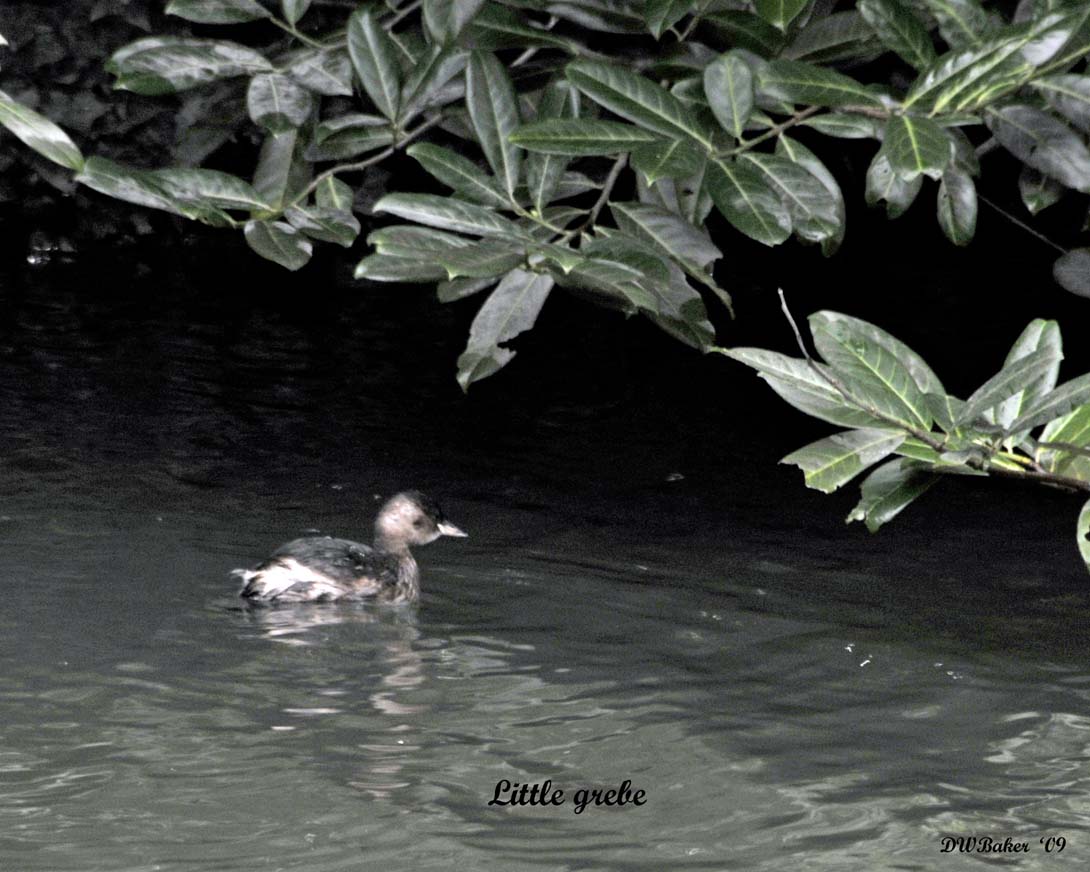
We arrived in Dublin about 9:30 this morning after an overnight flight. We’ll be joining 22 other birders on a tour run by Field Guides called “The Birds, the Music and the Pubs of Ireland.” All went smoothly as we were pushed along by the jet-stream giving us a flight time of around 5 ½ hours. The trip does not officially begin until tomorrow morning, but we wanted to get in ahead of schedule and get ourselves acclimated to the change in time. After getting our shuttle over to our hotel for the evening (Holiday Inn Express – doesn’t sound too Irish, eh?), we decided upon a short nap before heading out to get some fresh air. When we left the Inn, we were thrilled to see that immediately across the access road into the hotel grounds, there was a beautiful city park complete with a large pond, stream, wooded areas and a large field area. The place was downright birdy and we took advantage of the opportunity to bag our first three life-birds of the trip…all before the tour had actually begun! Eurasian coot, Little grebe, and the Tufted duck were our lifers which we spotted among some more familiar European birds including the Common magpie, Hooded crow, Black-headed gulls and Gray heron. If the rest of the trip proves to be as productive as this, we’ll be a couple of happy American birders!
Subscribe to:
Posts (Atom)